
Kauai County Arrest Log Archive
The official KPD Arrest Log is the starting point for any multi-day search. KPD posts a list of links. Each one opens a PDF covering a single calendar-day window. There is no consolidated weekly table to pull from. A missing link does not prove no arrests happened that day. The span is not guaranteed. The visible list typically reaches back about a month.
The rolling format works best when the date is uncertain. Move through adjacent PDFs. Compare the arrest date inside each file against the generation timestamp. A file often appears the next morning. A link's date and the event date can differ. Keep that gap in mind while you search.
Archive limit: KPD does not call its visible PDF list a complete or permanent arrest database.
Read Kauai County Arrest Reports
Search across days with care. Merging rows without their dates hides posting gaps and inflates arrest totals. Go date first, file by file.
- Open KPD's live archive and note the newest and oldest visible dates.
- Select dates around the incident, including the next posted file.
- Confirm the PDF's arrest range and report timestamp.
- Search exact name spellings and inspect all adjacent charge rows.
- Record the release code without treating it as today's custody status.
- Mark a missing date as unavailable, not as a no-arrest day.
Need only the newest report? The narrower Arrests Last 24 Hours page fits that job better. The blotter's purpose is tracking source dates across a rolling set and catching a report before it leaves public view.
Kauai Arrest Log Entry Fields
KPD uses the same table schema in each daily PDF, which makes reports easy to compare across dates. Still, the fields are thin. No booking photo appears. There is no bond amount, booking number, facility, court date, case number, or live custody marker either.
| Published field | Reading rule |
|---|---|
| Arrest Date Time | Use as the police event time, not a KCCC intake time. |
| Arrestee Name | Preserve source spelling; do not combine people based only on a name. |
| Residence City | Do not relabel this as the place of arrest or present custody. |
| Sex and Age | Report values tied to that dated source. |
| Charge | An charge shown one row at a time; several rows can concern one arrest. |
| Release Disposition | A processing result in that report, not a final court disposition. |
| PDF date and time | A publication clue, not proof of real-time completeness. |
Watch for charge-row duplication. Three charge rows under one name do not mean three arrests. The log also omits material protected by juvenile confidentiality, sealing, and similar legal restrictions. Any multi-day total built from raw rows would need a method. KPD itself has never provided one.
Kauai Weekend Arrest Posting
Weekends and holidays push many searches wider. KPD promises no guaranteed posting rule on the arrest-log page. Never assume a Monday link gathers in every weekend event. Check each available date around the period. Next-morning posting can add a later file. An arrest late in the day may land in a later report. The report may not have existed when an earlier search ran.
A missing link calls for the same restraint. A gap could stem from a publication issue or page maintenance. It could also be a report that was never linked. It is not evidence of zero arrests. When a date matters, save the official URL. Then ask KPD Records whether a public report exists for it.
Weekend check: Search adjacent calendar-day PDFs and allow for next-morning posting; KPD promises no holiday cadence.
Older Kauai Arrest Log Requests
When a PDF drops off the page over time, the KPD Records Section handles requests under Hawaii's Uniform Information Practices Act. The agency asks for helpful details. Include the full name, contact information, report number if known, report type, incident date, and required identification. Availability may depend on whether the investigation is complete and the case closed. Fees for research or copies can apply. The Records Section page also lists the official request and status channels.
Check the current form directions before sending identification. KPD also runs an official online request portal. State exactly what you want. Name the arrest report date and ask whether any separate record exists and can be released. An old web PDF, a booking image, or a full case file may no longer exist.
Kauai Arrest News Context
Local news can fill in what a short PDF row leaves out. Treat it as secondary. Each outlet makes its own editorial calls. The Garden Island's 911 Report category, Kauai Now's arrested tag, Hawaii News Now's Kauai section, and Civil Beat all publish on their own schedules. None of them replaces the official KPD record. The Kauai Now arrested index collects that outlet's coverage in one place.
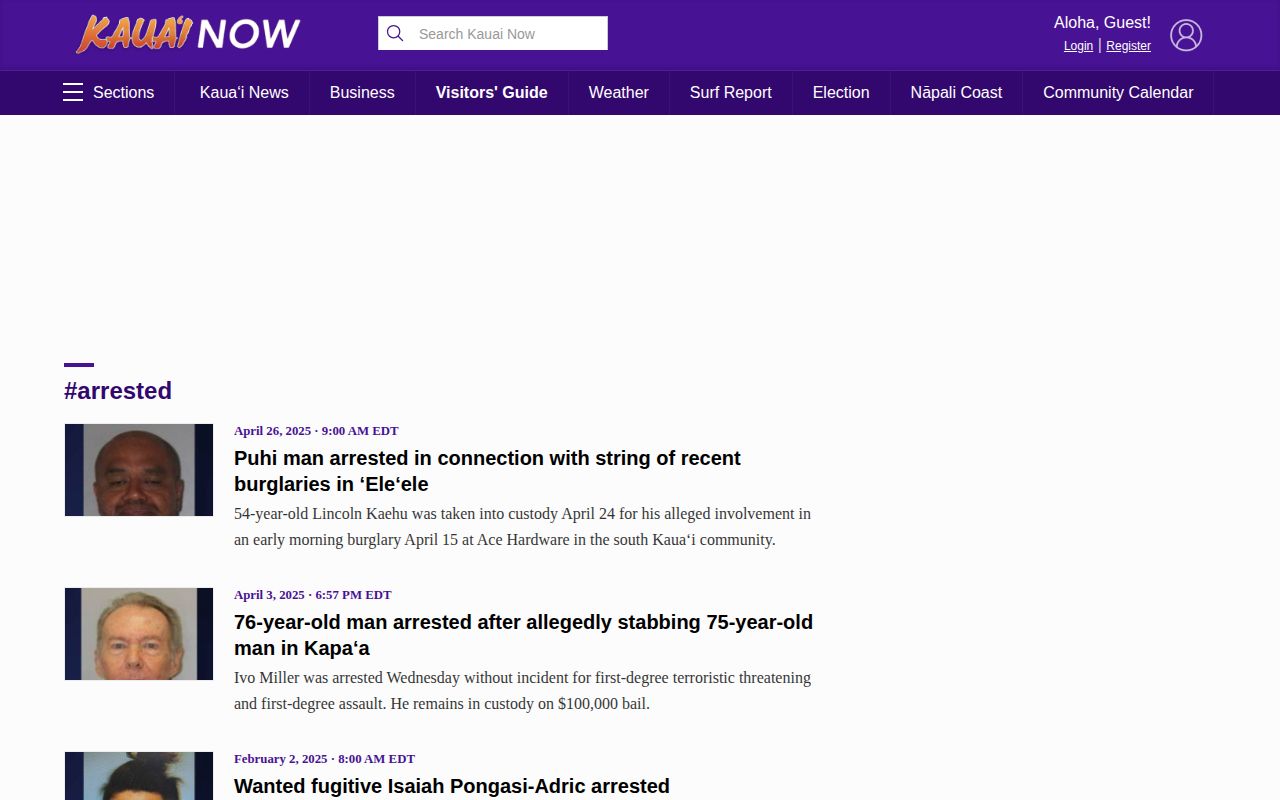
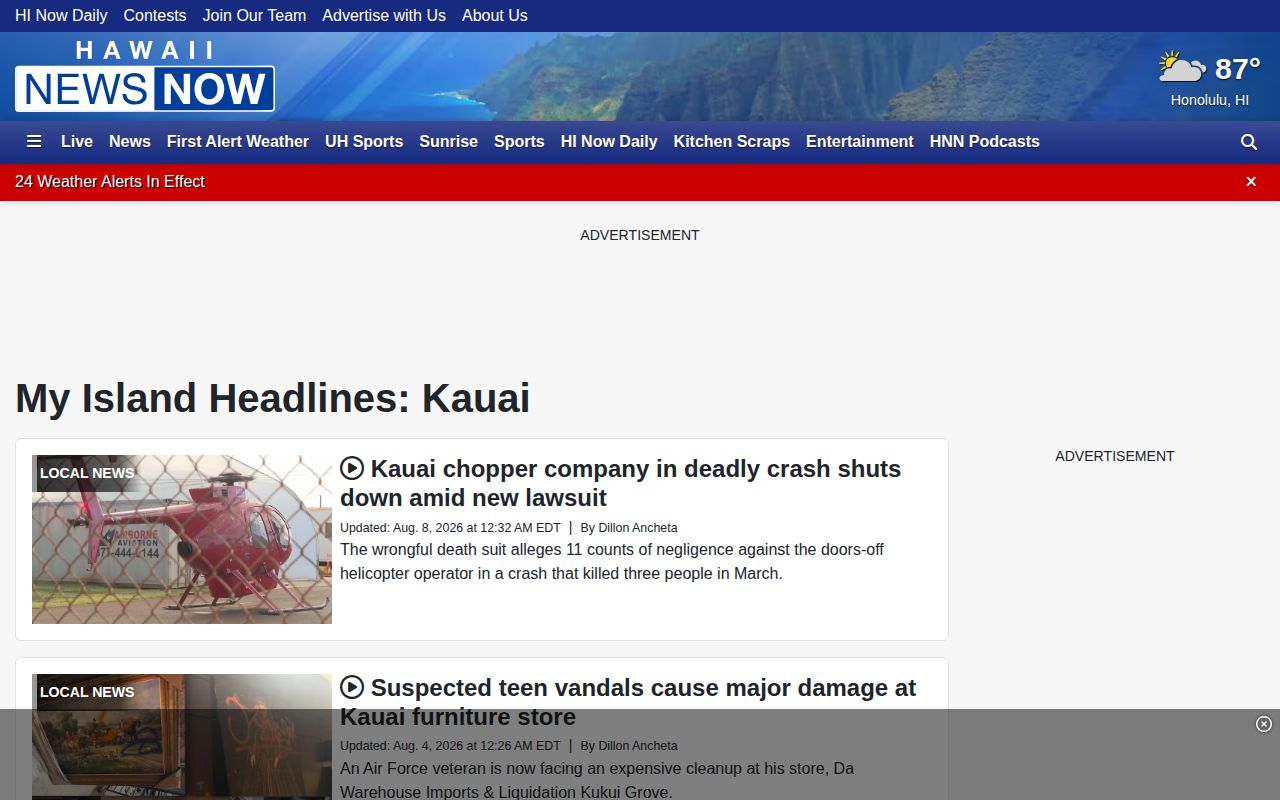
News stories can help you find a name or date. Verify every claim against the dated KPD report or a later court record. The Hawaii News Now Kauai page offers another view of island coverage.
News stories and Kauai Police Department PDFs can drift apart over time. A breaking article may quote a prosecutor or cite a court filing. It may also note a later custody change. The arrest PDF never mentions that. The two accounts play different roles. The PDF documents the Kauai arrest event itself, exactly as published. A reporter builds on later updates. Resist blending the versions, attaching a person-level photo, or assuming newer wording replaced the original Kauai Police Department source.
Kauai Arrests Versus State Custody
A Kauai blotter row will not tell you where the person sits today. KPD often does its first processing at its own cellblock. Once court wraps up, an ISC code can signal a move. The destination is the Intake Service Center and KCCC. Both sit under the Hawaii Department of Corrections and Rehabilitation. By the time anyone opens the PDF, that code may be old news. For state custody and alerts, Hawaii SAVIN through VINELink is the right tool. It tracks incarceration status. The original Kauai arrest event is not its focus.
Different systems hold different pieces. Filed court cases live in the Hawaii Judiciary's eCourt platforms. Those platforms carry their own access limits. Conviction records for adults sit with HCJDC and eCrim. The Federal Bureau of Prisons and ICE each run separate locators for their own detainees. A blank in one channel never erases the arrest showing in another. Each source answers a different question at a different stage.
Kauai Arrest Trends Need Care
The rolling archive makes a poor yardstick. It should not be used to rank neighborhoods or declare a crime wave in Kauai. Residence City is not the city where the offense happened. Rows repeat when charges get stacked. Juveniles may not appear at all. Dates sometimes drop out. The visible window keeps shifting underfoot.
For hard numbers, turn to KPD's annual and Police Commission reports. Those publish dated agency totals over defined periods. Those totals should never be traced back to individual names. They cannot "correct" the daily arrest PDFs either. If you need a case's final outcome, go to the court record itself. Respect the limits that apply to sealed, expunged, juvenile, and confidential files.