
How Kapaʻa Arrests Work
Kapaʻa is a Census-designated place, not an incorporated city. It runs no separate municipal police department. Policing for all of Kauai County comes from KPD. Its Kawaihau district contact is (808) 246-8104. That number is a geographic contact point, nothing more. It is not an arrest-log publisher or a searchable roster. On the 2020 Census-derived community map, Kapaʻa stands out as the largest of the three selected Kauai communities. It is home to 11,652 residents. Population size says nothing about arrest volume or risk. KPD's report carries a Residence City field. That field shows where the person is listed as living. It is not the incident site, the arrest site, or the booking site. Nor is it the current custody location. The official Census TIGERweb Hawaii CDP table backs up the community designation. It also shows how the community was selected.
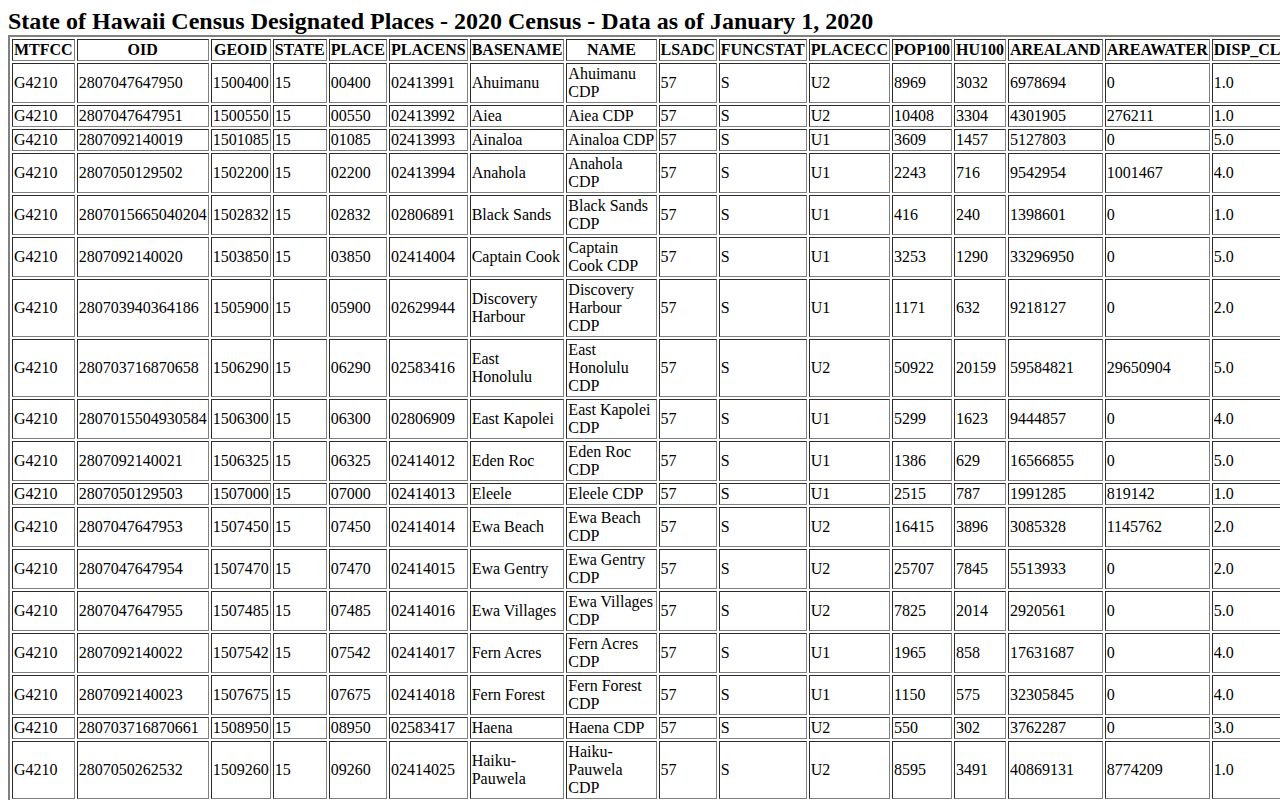
Kapaʻa's CDP status means the community operates no city police agency or jail.
Where Kapaʻa Arrests Appear
Start with the official KPD Arrest Log. It links separate daily PDFs, each covering one calendar-date window. Local news can add incident detail or a later update, but its editorial timing differs. It cannot replace the police record. KPD publishes no Kapaʻa booking-photo gallery, city roster, or city booking feed.
| Channel | Official? | What it provides |
|---|---|---|
| KPD daily arrest PDF | Yes | Arrest rows, charges, residence city, and release disposition for one date window; no photos. |
| KPD rolling Arrest Log | Yes | Links to the daily reports still visible in the county archive. |
| KPD Records | Yes | Requests for older, missing, corrected, or otherwise releasable records. |
| Hawaii SAVIN / VINELink | Yes | Covered DCR custody status and notices after entry into that system. |
| Kauai Now, HNN, Garden Island | No, editorial | Selected reports and follow-ups that must be checked against official sources. |
A photograph may appear in a specific KPD press release or public-assistance appeal. The daily PDFs stay text-only. Never attach a story photo or selective police-release image to a daily row through name matching.
Find a Kapaʻa Arrest Record
Begin with the arrest date, not a broad name search. The daily report runs chronologically and covers KPD only. One person can fill several rows. KPD lists one charge per row. Check the report heading and release disposition before drawing conclusions from those lines.
- Open the official KPD Arrest Log and select the likely calendar-date PDF.
- Check the arrest date and time, then compare the name and Residence City carefully.
- Read every charge row and the release disposition together.
- Use Hawaii SAVIN only when the question concerns covered DCR custody.
- Ask KPD Records for an older, missing, or corrected public record.
The county Kauai County recent-arrests hub lays out the full official-source chain. It also explains why the KPD log is not a live jail roster and why a booking photo may not exist in the public view.
Important: The arrest log captures the moment of booking only. Later case updates come from the court record where it is public.
When Kapaʻa Arrest Reports Post
KPD's primary recent-arrest source runs on delay. Each PDF covers a single calendar-day window. Files are commonly generated around 6:00 a.m. the next morning. That pattern is not a promise of real-time publication. A late booking, correction, system issue, holiday, or legal review can all affect what appears. The rolling archive is a set of files, not one permanent table. It shows roughly a month of visible dates, with at least one gap. KPD promises no exact retention span. A missing link does not mean no arrests occurred that day. It should not be filled with an unofficial copy that cannot be checked against KPD. Use Arrests Last 24 Hours for the same-day window and its lag checks. The Police Blotter navigation leads to a wider rolling-archive treatment. Neither window proves current custody.
What Kapaʻa Arrest Rows Show
KPD's compact schema helps when its limits stay visible. It omits a lot. There is no booking number, bond amount, current facility, booking photo, court case number, court date, prosecutor outcome, conviction, or live custody indicator.
| Field | How to read it |
|---|---|
| Arrest Date Time | The reported police event time, not KCCC intake time. |
| Arrestee Name | The adult name as KPD published it; do not merge people by name alone. |
| Residence City | Reported residence, not proof the event occurred in Kapaʻa. |
| Sex and Age | Source fields tied to the report date. |
| Charge | An charge listed one per row, not a conviction. |
| Release Disposition | A custody or processing code, not the final court result. |
Juvenile identifying records are a strict boundary. Hawaii law restricts juvenile court records, so the adult chronological blotter rule does not permit republishing protected juvenile names or photos.
KPD Records for Kapaʻa Arrests
The KPD Records Section handles requests under Hawaii's Uniform Information Practices Act. Its page notes that most releasable information gets reviewed for confidentiality. Ordinary processing asks for about 48 hours for a review or response. That is not a guaranteed production deadline. Reports generally go out after the investigation is complete. The case must also be closed. Requests go through the official KPD request portal. Include the report number if known, the report type, and the incident date. Add contact information and any identification the form requires. For a photograph, ask whether KPD holds one. Ask whether it is releasable. Do not assume a photo exists, is public, or is free.
Kaua‘i Police Department Records Section3990 Kaana Street, Suite 200
Lihue, HI 96766
Records Supervisor: (808) 241-1660
Records Clerk: (808) 241-1929
Email: kpdrecords@kauai.gov
The Kawaihau district line can route a local operational question. Official report requests still go through the county Records Section.
After a Kapaʻa Arrest
Initial processing can happen at KPD's cellblock in Līhuʻe. A release code may describe bail, release without charge, or release pending investigation. Other codes cover court processing or transfer. The ISC code means a detainee went to KCCC after a court appearance. It does not prove the person is still at KCCC. KCCC is a Hawaii DCR facility in Līhuʻe. It is not a Kapaʻa jail. For current covered state-custody notifications, use Hawaii SAVIN and the official VINELink route. A fresh KPD arrest can appear before SAVIN receives data. Someone released during early processing may never enter SAVIN coverage at all.
- Booking
- Administrative processing after arrest, which can include identity and charge recording.
- Arraignment
- The court stage at which charges and pleas are addressed.
- Disposition
- The outcome of a custody step or court case; KPD’s release disposition is not the final case outcome.
- Transfer
- Movement to another agency or facility, not the same as release.
Kapaʻa Arrest Statistics Need Context
Kauai County arrest numbers only tell part of the story. KPD's FY2024 annual report counted 3,109 total arrests countywide, split between 2,725 adults and 384 juveniles. The report also logged 3,740 charges. A July 2025 Police Commission packet added 218 arrests and 256 charges for that single month. Those are dated agency totals. They do not describe Kapaʻa alone. Dividing them by the CDP population would not yield a sound local arrest rate. Daily PDFs will not support a "most arrested community" ranking either. Residence City is not where the offense occurred. One arrest can generate several charge rows. Juvenile details may be withheld, and the visible archive has gaps. A fair trend analysis for recent arrests would demand a defined period, deduplication rules, and a stable denominator. Agency review matters too.
Kapaʻa Arrest News and Context
News stories add what a KPD row leaves out. Kauai Now's arrested tag, Hawaii News Now's Kauai page, and The Garden Island's 911 Report section each cover Kapaʻa arrests differently. Some outlets repeat a KPD release. Others follow the case with later charging language. The Kauai Now arrest-news index shows this secondary reporting layer at a glance.
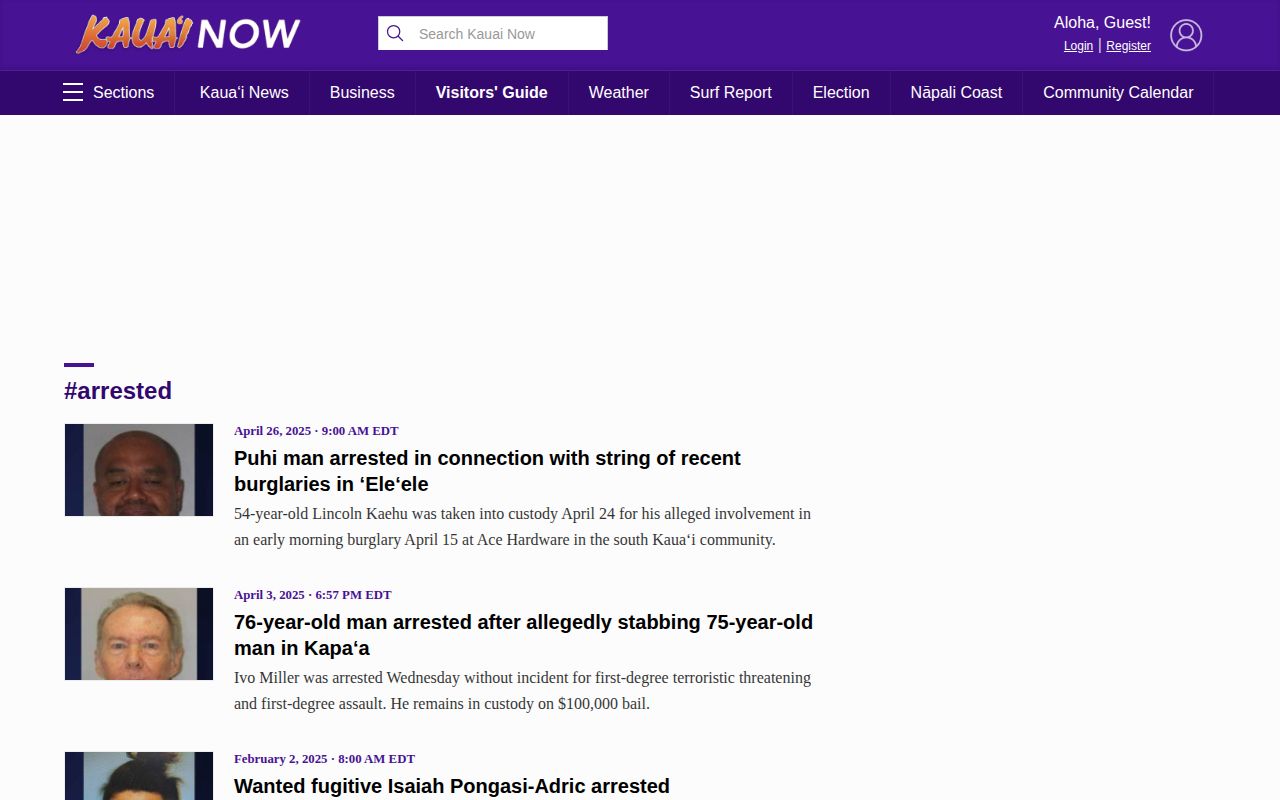
A news index helps with discovery. Person-level facts still need checking against the official KPD report and later court record. Each source has its own role. KPD documents the arrest event itself. A news story may carry a prosecutor statement, a court filing, or a correction filed later. Blending the two silently into a new claim serves nobody. And a news photo is never a booking photo, so treat the two as separate things.